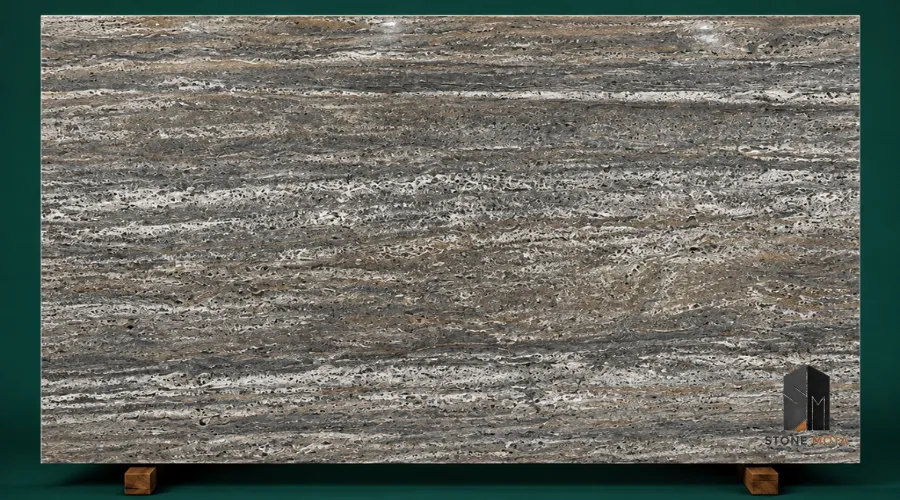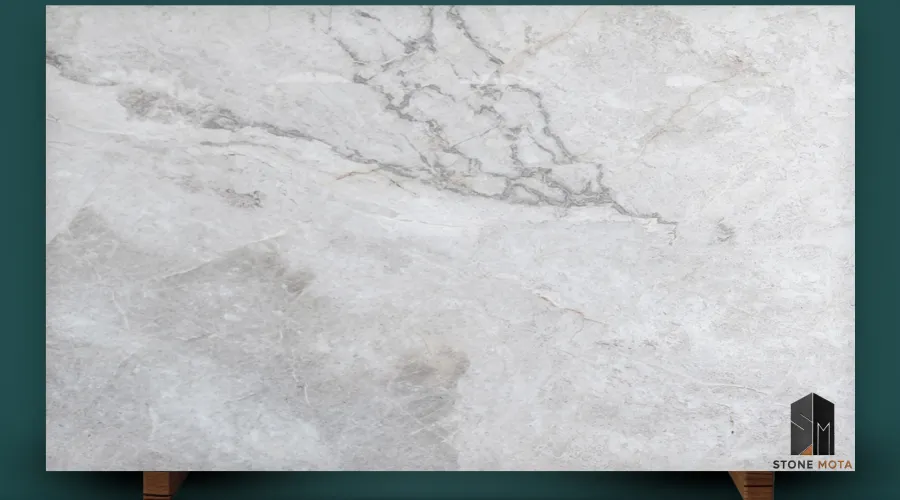
Some natural stones decorate a space. Others completely change its atmosphere.
Onyx stone belongs to the second category.
Known for its striking colors, layered patterns and translucent character, onyx can become one of the most visually powerful elements in an interior. When combined with carefully designed lighting, its natural structure can appear almost illuminated from within.
At STONE MOTA, onyx represents the artistic side of natural stone — where geology becomes architecture.
What Is Onyx Stone?
Onyx is a natural stone known for its distinctive layers, color variations and, in selected varieties, translucent properties.
Its appearance can range from soft cream and white tones to dramatic green, brown, amber and other rich colors.
The natural formations within each slab create patterns that can vary considerably.
This makes onyx particularly interesting for projects where individuality and visual impact are important.
Why Is Onyx Different From Other Natural Stones?
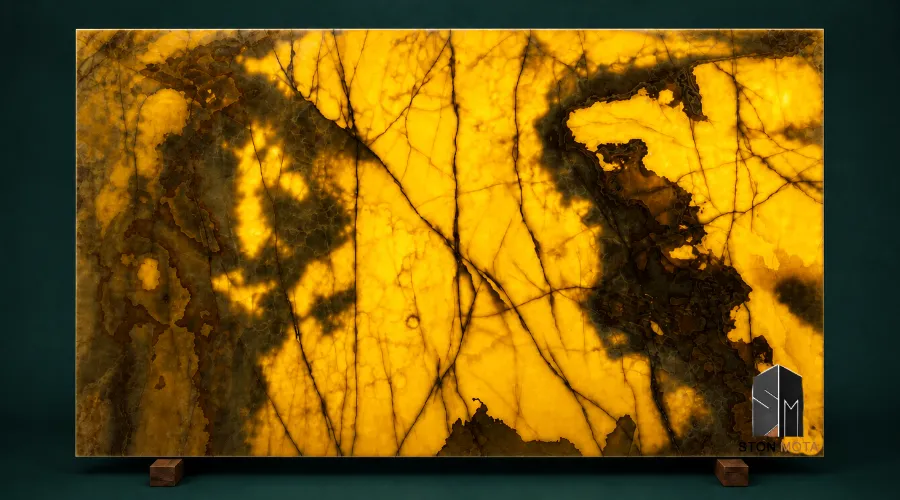
The defining feature of many onyx varieties is translucency.
When light passes through a suitable slab, parts of the natural pattern can become visible in a completely different way.
Colors appear deeper.
Layers become more pronounced.
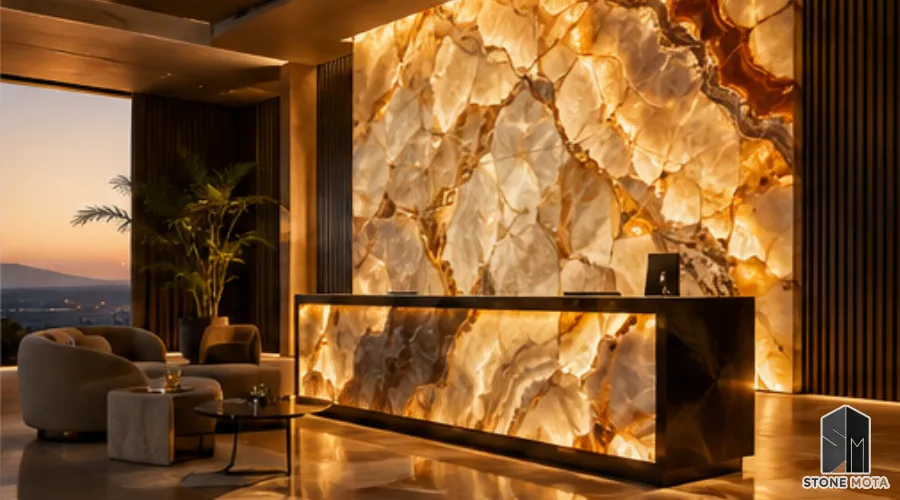
Patterns that may seem subtle under normal lighting can become dramatic when illuminated from behind.
This creates an opportunity that is less common with conventional stone surfaces: the wall itself can become a lighting feature.
Backlit Onyx: When Stone Becomes Light
One of the most recognizable applications of onyx stone is backlighting.
A carefully selected translucent slab can be installed with a suitable lighting system behind it.
The effect can be particularly striking in:
-
Reception areas
-
Hotel lobbies
-
Luxury restaurants
-
Feature walls
-
Bars
-
Spa interiors
-
Bathroom feature areas
-
Private residences
-
Decorative partitions
The lighting should be designed together with the stone.
The objective is not simply to make the entire surface bright. A well-designed system can emphasize the natural layers and variations within the material.
Selecting Onyx for a Backlit Application
Not every onyx slab will produce the same lighting effect.
When choosing material for a backlit installation, designers should evaluate:
-
Translucency
-
Thickness
-
Natural layering
-
Color density
-
Vein direction
-
Slab size
-
Lighting intensity
-
Installation system
The stone should ideally be viewed under controlled illumination before the final selection is made.
This is particularly important because the appearance of an illuminated slab can be dramatically different from its appearance under ordinary showroom lighting.
Onyx in Luxury Hospitality
Onyx can create a strong visual identity for hospitality environments.
A reception desk with a backlit onyx front can immediately establish a sophisticated atmosphere.
A restaurant bar can use an illuminated slab as a focal point.
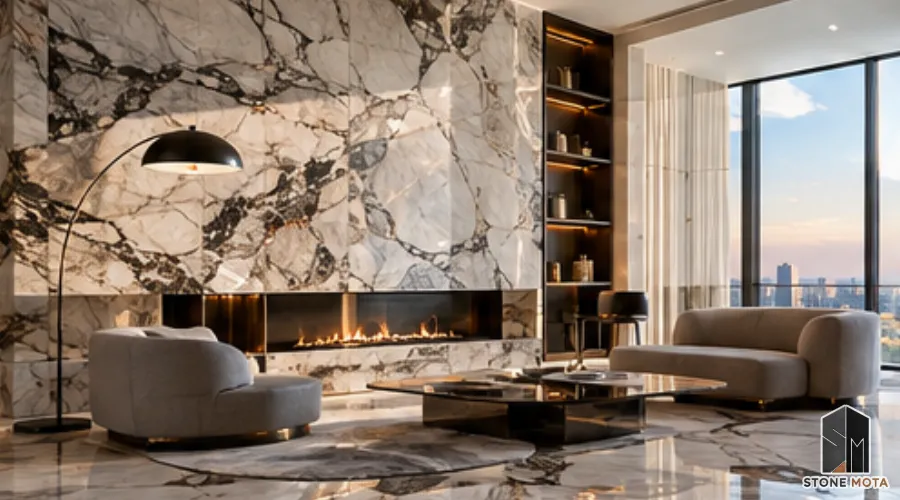
A hotel lobby can combine onyx with wood, brass, glass and dark stone to create layers of texture and light.
Because the material itself provides strong visual interest, surrounding elements can remain relatively restrained.
Onyx for Residential Interiors
Onyx does not have to be limited to hotels and commercial projects.
In residential architecture, it can be used selectively to create unique focal points.
Possible applications include:
Feature Walls
A carefully positioned onyx wall can become the visual center of a living room, dining area or entrance.
Bathrooms
Onyx can add a distinctive character to vanities, wall surfaces and selected decorative areas.
Kitchen and Bar Areas
When appropriate for the application, onyx can introduce a luxurious visual element to entertaining spaces.
Decorative Panels
Smaller pieces can be fabricated into partitions, furniture elements and architectural details.
Color Can Define the Entire Mood
One of the most exciting aspects of onyx is its color range.
Warm amber and honey tones can create a welcoming atmosphere.
Green variations can introduce a more natural and dramatic character.
Cream and white varieties can produce a softer appearance.
Darker combinations can create contrast with metallic details and contemporary interiors.
The color should be considered together with the lighting temperature and surrounding materials.
Pairing Onyx With Other Materials
Because onyx can be visually powerful, material balance becomes important.
Wood can soften the appearance.
Dark metals can emphasize contrast.
Glass can maintain a sense of lightness.
Neutral stone can prevent the space from becoming visually overloaded.
The goal is not to compete with the natural pattern of the onyx but to give it an environment where it can stand out.
Is Onyx Suitable for Every Application?
Onyx is often selected primarily for its visual qualities, and application suitability should always be evaluated carefully.
The intended location, level of traffic, moisture exposure, fabrication method and maintenance requirements should all be considered before installation.
For demanding surfaces, technical guidance from qualified stone professionals is particularly important.
The most successful onyx projects use the material where its unique visual properties provide genuine design value.
Why Choose STONE MOTA?
At STONE MOTA, natural stone is approached as a material with individual character rather than a generic surface.
Onyx is particularly suited to projects where architects and designers want something visually distinctive.
The combination of natural patterns, color variation and potential translucency allows onyx to become part of the lighting and atmosphere of an interior.
Final Thoughts
Onyx stone occupies a special position in architectural design.
It combines natural geological patterns with color, depth and, in suitable varieties, the extraordinary ability to interact with light.
Used thoughtfully, a single slab can become a wall, a feature, a source of atmosphere and even an artistic centerpiece.
For projects that demand individuality, onyx offers a natural material with very few visual equivalents.
At STONE MOTA, we believe the most memorable spaces begin with materials that have something unique to say.